
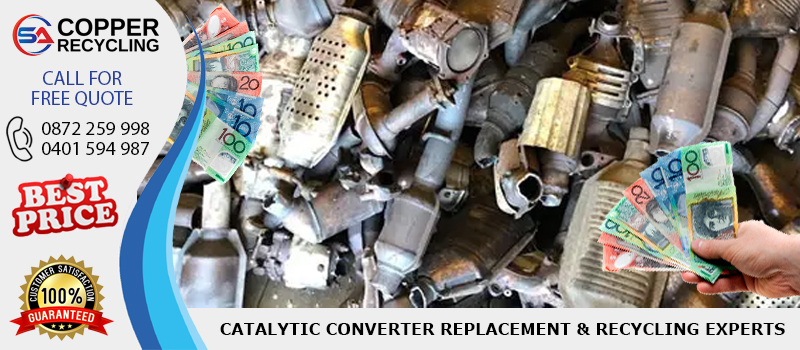
Catalytic converters are an important component of modern vehicle exhaust systems. When one becomes damaged, blocked or reaches the end of its usable life, replacement may be necessary. But what happens to the old catalytic converter after it has been removed? In many cases, it can enter the recycling stream instead of becoming general waste. Understanding the difference between catalytic converter replacement and recycling in Adelaide can help vehicle owners, mechanics and automotive businesses make more informed decisions about old vehicle components.
What Does a Catalytic Converter Do?
A catalytic converter is part of a vehicle’s exhaust system. Its purpose is to help reduce certain pollutants produced by the engine before exhaust gases leave the vehicle.
Inside the converter is a honeycomb-like structure coated with materials that assist chemical reactions involving exhaust gases. Over time, the component can become damaged, contaminated or less effective.
Because catalytic converters contain recoverable materials, an old unit should not automatically be treated as ordinary rubbish when it is removed from a vehicle.
When Does a Catalytic Converter Need Replacement?
There are several reasons a mechanic may recommend replacing a catalytic converter.
Common situations can include:
- Internal damage or deterioration
- Blockage affecting exhaust flow
- Physical damage caused by an impact
- Persistent vehicle performance problems
- Excessive heat damage
- Emissions-related faults
- A converter that has reached the end of its service life
A vehicle should be properly inspected before replacing a catalytic converter. Symptoms such as poor acceleration, unusual exhaust noises or warning lights can have several possible causes, so diagnosis by a qualified automotive professional is important.
Once an old converter has been removed, the next question is what should happen to the unwanted component.
What Happens to an Old Catalytic Converter?
An old catalytic converter can potentially be recycled rather than simply discarded. Catalytic converters are interesting from a recycling perspective because their internal components can contain recoverable materials. Specialist recycling processes are used to separate and recover suitable resources.
The exact recycling process depends on the converter and the materials it contains. This means that a component that is no longer useful for its original automotive purpose may still have a role within the recycling industry.
Contact SA Copper Recycling on 0872 259 998 to ask about the recycling process and accepted materials.
Why Are Catalytic Converters Recycled?
Recycling helps recover materials that might otherwise be lost as waste.
There are several reasons catalytic converter recycling is relevant to the automotive industry:
For Adelaide’s automotive industry, responsible scrap management can therefore be part of a broader approach to reducing unnecessary waste.
What Can Affect the Recycling Value of a Catalytic Converter?
Not every catalytic converter has the same recycling value. The value of an individual unit can depend on several factors, including its type, identifying information, condition and internal composition. Market conditions for recoverable materials can also change over time.
This is why a simple “price per catalytic converter” does not necessarily apply to every unit. If you have several old converters, keeping them identifiable and contacting a recycler before making assumptions about their value can make the process easier.
Can Damaged Catalytic Converters Still Be Recycled?
A catalytic converter does not necessarily have to be in working condition to have recycling potential.
For example, a converter may be removed because its internal structure has deteriorated or because a replacement has been installed. The component may no longer be suitable for use on a vehicle, but parts of it may still be suitable for material recovery.
However, acceptance and assessment can vary depending on the specific converter.
If you have an old or damaged catalytic converter, it is worth asking a recycling business about the item rather than assuming it has no value.
If you have old catalytic converters or other automotive scrap, call SA Copper Recycling on 0872 259 998 !
Catalytic Converter Recycling in Adelaide
Adelaide has a large automotive sector made up of private vehicle owners, mechanics, workshops, dismantlers and commercial operators. As vehicles are repaired and components are replaced, automotive scrap can accumulate quickly.
Catalytic converters are one example of a component that can be separated from general workshop waste and directed towards recycling. For local customers, SA Copper Recycling‘s physical yard is located at 4 Greenfields Dr, Green Fields SA 5107, Australia.
If you are travelling with old automotive scrap, it is sensible to contact the business first to confirm current acceptance requirements and the appropriate process for your material.
What Should You Do With an Old Catalytic Converter?
If you have an old converter sitting in a garage, workshop or storage area, there are a few practical steps you can take.
Catalytic Converter Replacement vs Recycling
Replacement and recycling are two different stages.
Understanding this difference can help vehicle owners and workshops avoid treating every removed automotive component as ordinary waste.