
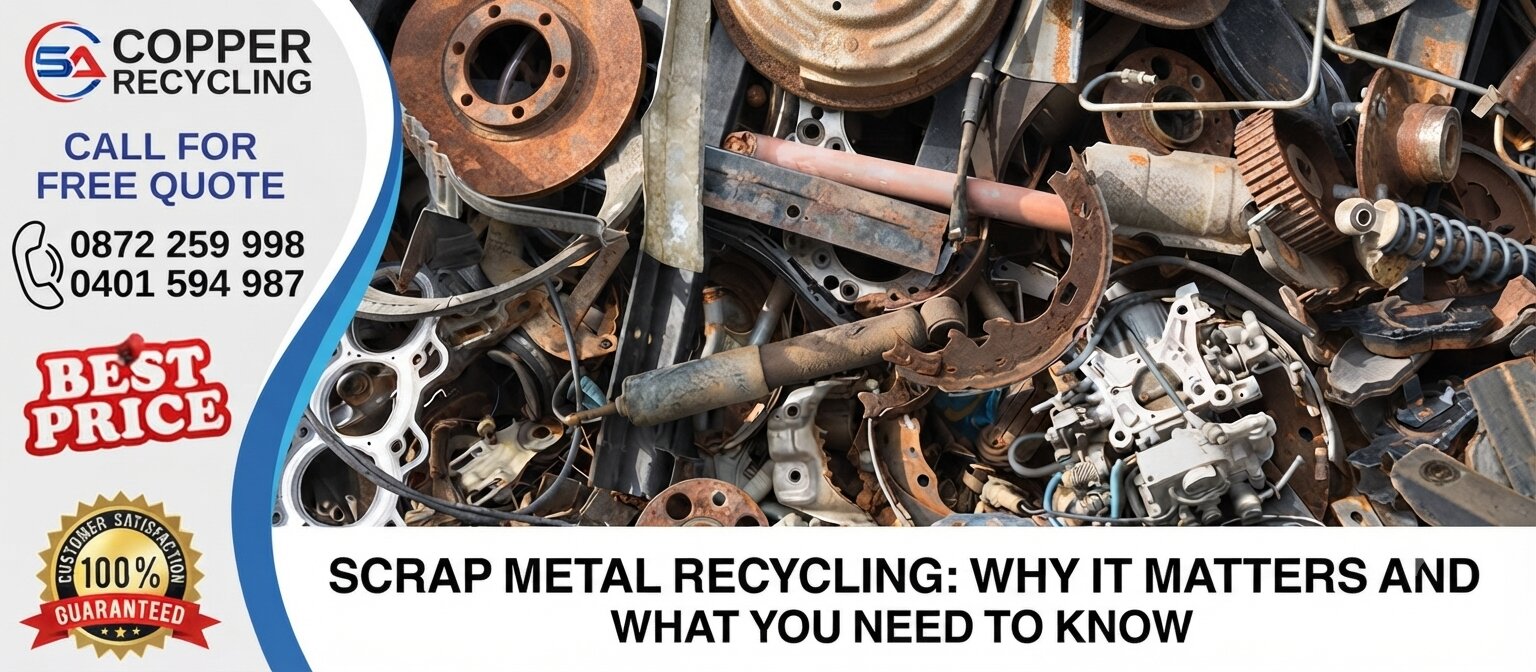
Scrap metal is not just waste. Copper wire, aluminium, steel, brass, batteries, radiators, car components, and any other type of metal products can be collected, processed and put back into the manufacturing chain. This procedure includes several steps including collection, sorting, processing and separation for re-use. The process of recycling can also contribute to reducing waste in landfills, saving natural resources, and minimizing the environmental effects of the production process of metals from virgin materials.
Recycling scrap metal is an effective way to get rid of your unwanted metal and to help the environment by using materials in a circular fashion.
What Is Scrap Metal Recycling?
Scrap metal recycling involves the collection of scrap metal, segregation of the metals according to the type and quality, processing and reconditioning of the scrap metal ready for use. Scrap metals are commonly classified into the following broad groups:
- Ferrous Metal – Ferrous metals have iron content. Examples of such metals include steel, cast iron, automotive metal, structural metal, steel tubing, machinery, household appliances and steel wheels.
- Non-Ferrous Metals – Non-ferrous metals have little iron content and are highly valuable owing to their characteristics and market demand. Examples of non-ferrous metals include aluminum, copper, brass, lead, zinc, stainless steel and other special alloys of metals.
Why Is Scrap Metal Recycling Important?
Metal is a valuable resource, and there are various forms of scrap that can be recycled rather than sent to a landfill. When recyclable metal is segregated from other waste, it can enter the cycle of recycling and ultimately serve as raw material in the manufacture of new items.
This is especially crucial because the manufacturing of metal from raw materials involves mining, transport, and processing. Recycling of metal aids in retaining these resources within the loop.
What Happens to Scrap Metal After Collection?
The recycling process may differ based on the material used, but the aim is always the same: to extract metal that is still able to be used again for another function.
Scrap is usually evaluated and sorted based on what it is and how it is made up. Various metals can then be processed using the appropriate machinery to get them ready for recycling.
After it is recovered and processed, the metal becomes the raw material for making other things. Thus, scrap metal does not always have to be the final stage of something’s use.
Recycle your unwanted metal and make better use of resources that still have value.
Why Should You Separate Scrap Metal?
Different metals have different characteristics and values, so mixing everything together isn’t always the best approach.
Where practical, keep materials such as:
- Copper
- Brass
- Aluminium
- Steel
- Lead
- Stainless steel
Removing obvious non-metal materials can also make sorting easier. If you’re unsure whether a particular item is recyclable, it’s better to ask a scrap metal recycler before throwing it away.
Environmental Benefits of Scrap Metal Recycling
One of the most important factors of recycling metals is the environmental factor.
- Helps Reduce Landfill Waste – Recoverable metals do not have to be a component of general waste disposal.
- Conserves Natural Resources – By recycling current metal supplies, there is no requirement for virgin natural resources to be harvested from the Earth.
- Resource Recovery – Through recycling, metals do not get disposed of and lost after one-time use but continue to remain a component of production processes.
- Helps Reduce Impact of Extracting Raw Materials – The process of mining virgin materials can demand significant amounts of resources. Using recovered metal reduces the dependence on the harvesting of newly obtained materials.
How Can You Get More Value From Your Scrap Metal?
Some simple planning can make your scrap a lot easier to evaluate. Prior to taking your scraps for recycling:
- Ensure that you have separated any different kinds of metals that can be separated.
- Ensure that clean metal is separated from highly contaminated or mixed metal.
- Wherever safe and possible, ensure that non-metallic parts are stripped off.
- Don’t throw away anything in large quantities among the household wastes.
But most of all, don’t throw away something just because it is not worth much anymore. Some scrap metal items can always be recycled.
A More Responsible Approach to Metal Waste
Every time scrap metal is collected, it is a means by which something is kept out of the waste stream immediately. This makes recycling a good process that will match unwanted items with new purposes.
When you find yourself decluttering the garage, finishing a renovation, working in your workshop, or dealing with commercial scrap, separating metal is a relatively easy thing to do.